8th August 2026 | Nagaland Current Affairs News Analysis (Prelims+Mains)
Topic 1- Appointment of Nagaland Cricket Administrator to National Team Leadership
Context
GS Paper II (Government Policies and Interventions, Social Sector / Sports Development) & GS Paper III (Inclusive Growth and Development in the North-Eastern Region).

Introduction
The President of the Nagaland Cricket Association (NCA), Watinuksung Jamir, has been appointed as the Team Manager of the Indian Cricket Team for the international Test series against Sri Lanka. This marks the first instance of a sports administrator from Nagaland being entrusted with a managerial role for the national team on an international assignment.
The appointment reflects the institutional integration of North-Eastern sports bodies into the national ecosystem, serving as a landmark event in the decentralization and recognition of sports governance across India's peripheral states.
Key Highlights & Significance
Breakthrough in Regional Sports Governance: The appointment represents the expanding footprint of sports administrators from the North-Eastern states in national leadership roles, breaking historical urban-centric centralization in sports administration.
National Recognition of Local Leadership: Acknowledges the sustained efforts of regional administrators toward building grassroots infrastructure, player talent pipelines, and sports management frameworks in Nagaland.
Psychological and Institutional Motivation: Demonstrates to regional youth and sports institutions that national and global pathways are accessible, fostering greater confidence and participation in mainstream Indian sports.
Role Expansion in Professional Administration: Highlights the shift in sports administration toward including leaders experienced in managing challenging terrain and emerging sports markets.
Sports Governance and Development in the North-East
Key Advantages & Opportunities
Incentivizing Regional Talent Development: Integration at the administrative level accelerates infrastructure projects, talent scouting programs, and corporate sponsorship outreach in non-traditional sports hubs.
National Integration through Sports: Sports act as a powerful medium for socio-cultural integration, creating unified platforms that link peripheral regions directly with mainstream national narratives.
Capacity Building for Local Sports Bodies: Administrative exposure at the highest international level allows regional associations to adopt professional governance standards, event logistics, and player development strategies locally.
Ongoing Structural Challenges
Infrastructure Deficits: Lack of state-of-the-art training facilities, all-weather grounds, and high-performance centres in rural and hilly districts continues to constrain talent scouting.
Funding and Logistics Constraints: Financial dependency on apex national bodies and logistical barriers created by geographical isolation hinder consistent regional tournaments.
Under-representation in National Frameworks: Despite substantial athletic talent, managerial and coaching representation from North-Eastern states remains lower compared to traditional cricket powerhouses.
Way Forward
Institutionalizing Talent and Administrative Pipelines: Formulate structured programs within national sports federations to train and elevate regional sports administrators, coaches, and support staff.
Strengthening Infrastructure & Grassroots Academies: Establish modern cricket academies and multi-sport complexes in regional hubs like Dimapur and Kohima, leveraging Public-Private Partnerships (PPP) and central grants.
Regular Exposure Tours: Increase the frequency of regional participation in national-level domestic tournaments to bridge competitive gaps and enhance administrative capabilities.
Sustained Policy Support: Utilize schemes like Khelo India to provide targeted funding and mentorship to sports bodies operating in non-metropolitan and border regions.
Conclusion
The appointment of Watinuksung Jamir as Team Manager of the Indian Cricket Team demonstrates the growing recognition of administrative talent from Nagaland at the national level. By addressing infrastructure and governance gaps, India can build an inclusive sports ecosystem where administrative leadership and athletic talent thrive across all regions.
Practice UPSC Questions Prelims Practice Question Q1. With reference to sports governance and initiatives in India, consider the following statements:
Which of the statements given above is/are correct? (a) 1 only (b) 1 and 2 only (c) 1 and 3 only (d) 1, 2, and 3 Answer: (a) Explanation: Statement 1 is correct (Khelo India focuses on grassroots sports development). Statement 2 is incorrect because 'Sports' falls under the State List (Entry 33) of the Seventh Schedule. Statement 3 is incorrect as sports federations (like the BCCI) are autonomous non-governmental bodies, not statutory bodies directly managed by the Ministry. Mains Practice Question Q2. "Sports administration and infrastructure in the North-Eastern states have historically faced structural challenges, yet sports remain a potent tool for national integration and youth empowerment." Discuss the role of inclusive sports governance in bridging regional disparities in India. (15 Marks, 250 Words) |
Topic 2- HPC in Nagaland: A Transformative Step towards Holistic Student Assessment
Context
GS Paper II (Issues Relating to Development and Management of Social Sector/Services relating to Education, Human Resources) & GS Paper II (Governance, Transparency, and Accountability).

Introduction
The Department of School Education, Government of Nagaland, has adopted the Holistic Progress Card (HPC), designed by PARAKH (Performance Assessment, Review, and Analysis of Knowledge for Holistic Development) under NCERT. This reform aligns Nagaland's school education system with the vision of the National Education Policy (NEP) 2020. By shifting away from traditional, examination-centric evaluations dominated by marks and rote memorization, the HPC establishes a learner-centric, 360-degree assessment framework that measures a child's progress across cognitive, socio-emotional, physical, and creative domains.
Key Highlights: Traditional vs. HPC Assessment System
Parameter | Earlier Assessment System | HPC Assessment System |
Primary Focus | Marks, grades, and end-of-term scores | Holistic progress & competency- based learning standards |
Learning Pedagogy | Relied heavily on memorization, recall, and written tests | Emphasizes understanding, real-life application, and 21st-century skills |
Assessment Frequency | Conducted primarily through periodic/annual examinations | Continuous and comprehensive evaluation (formative assessment) |
Scope of Assessment | Evaluated academic achievement in isolation | Assesses cognitive, socio-emotional, physical, and creative development |
Feedback Mechanism | Provided limited feedback (ranks, pass/fail status) | Provides descriptive, constructive feedback to guide self-improvement |
Peer Dynamics | Encouraged marks-based competition and comparison | Encourages individual growth, self-reflection, and peer learning |
Role of the Teacher | Acted primarily as an examiner/evaluator | Acts as a facilitator, mentor, and learning supporter |
Advantages of implementing the HPC
Multidimensional Child Development: Recognizes education beyond academic scores, integrating emotional resilience, physical health, values, and creative skills into the assessment matrix.
Reduction in Student Stress: Replaces high-stakes, end-of-year examinations with continuous formative evaluations, reducing exam-related anxiety and mental pressure.
Early Gap Identification & Targeted Intervention: Enables teachers to identify specific learning difficulties early in the academic cycle, allowing for timely pedagogical adjustments.
Meaningful Descriptive Feedback: Replaces single-letter grades with actionable diagnostic feedback, helping learners understand their personal strengths and areas for improvement.
Enhanced Parental & Community Engagement: Offers parents a clear, comprehensive narrative of their child's developmental trajectory, encouraging active collaboration between home and school.
Alignment with NEP 2020 & 21st-Century Competencies: Directly supports the national mandate of shifting from content-heavy curricula to competency-based education.
Implementation Challenges
Subjectivity in Evaluation: Continuous, qualitative assessment can introduce teacher bias or evaluation variances unless standardized rubrics and moderation mechanisms are strictly enforced.
Teacher Readiness and Training Deficit: Transitioning from passive grading to active observation requires continuous capacity building, which is difficult to scale rapidly across remote cadres.
Infrastructural and Digital Divide: Remote and rural schools in hilly terrains face severe constraints in internet connectivity, device access, and power supply, hindering smooth digital record-keeping.
Institutional Resistance to Change: Deeply ingrained cultural preferences for marks, ranks, and board-exam scores among parents, teachers, and administrators create inertia against holistic models.
Way Forward
Continuous Teacher Training: Institutionalize capacity-building programs across all educational blocks to train teachers in rubrics-based evaluation, socio-emotional tracking, and formative assessment tools.
Infrastructural Investment: Strengthen digital infrastructure in rural and remote schools, offering offline-first digital solutions for record-keeping where connectivity is erratic.
Parental Sensitization Campaigns: Conduct community-level awareness drives to align parental expectations with competency-based education rather than numerical scores.
Robust Moderation Frameworks: Establish clear, standardized evaluation criteria to ensure consistency, transparency, and fairness across diverse classroom environments.
Conclusion
The adoption of the Holistic Progress Card in Nagaland represents a strategic shift toward reforming school-level evaluation. By addressing infrastructure gaps, building teacher capacity, and fostering community awareness, Nagaland can create an inclusive learning environment that measures both student performance and personal growth.
Practice UPSC Questions Prelims Practice Question Q1. With reference to the 'Holistic Progress Card (HPC)' and 'PARAKH', consider the following statements:
Which of the statements given above is/are correct? (a) 1 and 2 only (b) 2 and 3 only (c) 1 and 3 only (d) 1, 2, and 3 Answer: (c) Explanation: Statement 1 is correct (PARAKH is established under NCERT). Statement 2 is incorrect because HPC eliminates reliance on single annual tests, adopting continuous formative evaluation. Statement 3 is correct (HPC covers 360-degree evaluations across all four schooling stages in alignment with NEP 2020). Mains Practice Question Q2. "Rote memorization and examination-centric systems have long hindered critical thinking in Indian school education." In light of this statement, critically evaluate the role of the Holistic Progress Card (HPC) launched under NEP 2020. What operational challenges must state governments address to ensure its successful implementation in remote regions? (15 Marks, 250 Words) |
Topic 3- Chief Minister's Yarn Bank Scheme: Revitalizing Nagaland's Handloom Industry
Context
Syllabus Mapping: GS Paper II (Government Policies and Interventions for Development in Various Sectors, Welfare Schemes for Vulnerable Sections) & GS Paper III (Indian Economy: Inclusive Growth, Cottage Industries, Rural Employment, and Tribal Development).
Introduction
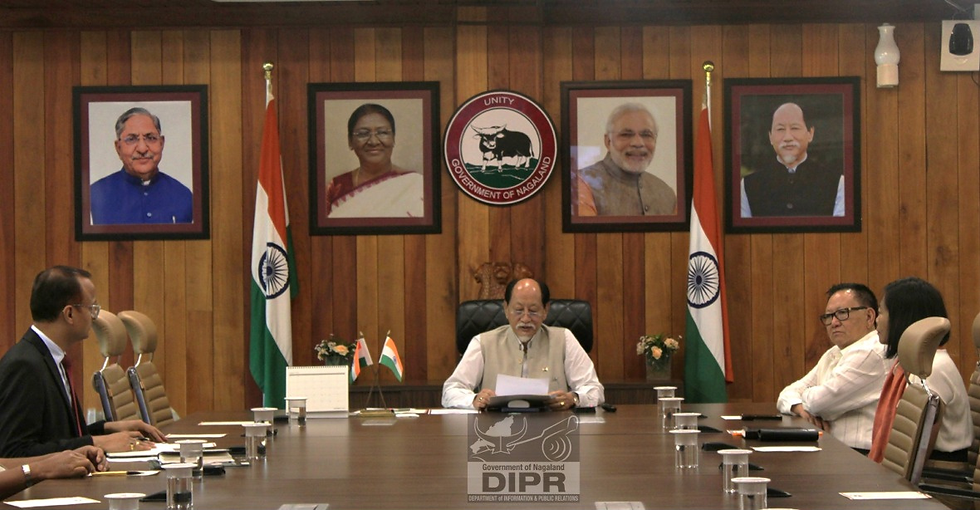
On the occasion of the 12th National Handloom Day (August 7, 2026), Nagaland Chief Minister Dr. Neiphiu Rio virtually launched the Chief Minister's Yarn Bank Scheme from Kohima. Established at the District Industries Centre (DIC), State Industrial Park in Toluvi, Dimapur, this dedicated facility addresses the chronic challenges of high raw material costs, supply chain bottlenecks, and middleman exploitation faced by weavers across the state. Implemented by the Department of Industries & Commerce under the Ministry of Textiles' Raw Material Supply Scheme (RMSS) guidelines and supported by the Chief Minister's Innovative Fund, the scheme aims to modernize traditional weaving while safeguarding the cultural identity of Naga tribes.
Key Features of the Yarn Bank Scheme
Centralized Supply Hub: Functioning out of the State Industrial Park, Toluvi, Dimapur, the Yarn Bank serves as a single-window supply repository for active weavers across all districts of Nagaland.
Subsidized Mill-Gate Pricing: Supplies natural yarns—including cotton, Eri silk, Muga silk, bamboo fibre, and blended natural fibres—at direct mill-gate prices. In addition, the State Government provides an extra 15% subsidy on raw material purchases.
Targeted Coverage: Designed to benefit between 5,000 and 10,000 active weavers every year, prioritizing self-employed women weavers and registered cooperative societies (minimum 10 members).
Verification and Authentication: Beneficiaries must possess a valid Handloom Mark (HM) Identity Card, be registered on the state's weaver database app, and hold an official Yarn Pass Book for transparent procurement.
Digital Management & Accountability: Integrates a real-time digital dashboard for inventory tracking and subsidy disbursement, backed by district-level monitoring committees, third-party audits, and a dedicated toll-free helpline.
Structural Challenges in Nagaland's Handloom Sector
Geographical Isolation & High Logistics Costs: Nagaland's landlocked, hilly terrain forces weavers to travel long distances to commercial centers or neighboring states to purchase raw yarn, resulting in exorbitant freight expenses.
Price Volatility & Middleman Exploitation: Artisans have historically relied on informal intermediaries, paying inflated rates for raw yarn, which significantly shrinks profit margins for handloom products.
Shift Away from Backstrap Looms: The decline of traditional natural-dye processing and hand-spinning, coupled with competition from cheap, machine-made synthetic textiles, has disincentivized younger generations from pursuing traditional weaving.
Database & Credit Deficits: A lack of organized digital registration and institutional credit mechanisms previously left genuine rural weavers excluded from central and state welfare initiatives.
Strategic Significance of the Intervention
Economic Empowerment of Women: Over 80% of weavers in Nagaland are women. By lowering input costs and enhancing income predictability, the scheme directly supports women's financial autonomy and rural household stability.
Preservation of Living Cultural Heritage: Naga textiles—such as traditional tribal shawls, wraps, and ceremonial motifs—are central to tribal identity. Stabilizing yarn supply preserves these unique heritage designs on backstrap and frame looms.
Promotion of Eco-Friendly Textiles: Focusing on natural fibres like Eri silk, Muga silk, and bamboo fibre aligns Nagaland's handloom industry with growing global demand for sustainable, cruelty-free, and organic fashion.
Boost to Market Competitiveness: Mill-gate procurement coupled with a 15% subsidy allows local weavers to price their finished garments competitively in domestic and international markets.
Governance & Safeguards
[Weaver Registration] ──► [HM Card & Database Check] ──► [Yarn Passbook Issued]
│
[Grievance Redressal] ◄── [Digital Inventory Dashboard] ◄───────┘
Eligibility Criteria: Applicants must be active weavers aged 18 or above, or members of registered handloom cooperative societies.
Census Cross-Verification: Applications are verified against state handloom census data to eliminate duplicate or fraudulent claims.
Monitoring & Redressal: Independent third-party audits and district-level monitoring committees oversee operations, backed by a toll-free helpline for rapid grievance resolution.
Way Forward
District-Level Distribution Nodal Depots: Extend yarn distribution sub-centers to remote eastern districts (such as Tuensang, Mon, Kiphire, and Longleng) to reduce last-mile transport costs for rural weavers.
Geographical Indication (GI) Tagged Branding: Combine cheap raw yarn access with formal GI certification, enabling Naga handloom products to access premium national and export markets under dedicated state brands.
Integration with Common Service Centres (CSCs): Utilize rural CSCs to assist non-tech-savvy weavers in completing digital app registrations and tracking their Yarn Pass Book status.
Skill Upgradation & Design Innovation: Pair the Yarn Bank scheme with modern design intervention workshops to help traditional weavers adapt heritage patterns into contemporary market apparel.
Conclusion
The Chief Minister's Yarn Bank Scheme serves as an institutional mechanism to protect Nagaland's handloom sector from supply disruptions and price inflation. By pairing subsidized raw materials with digital governance tools, the state provides its weaving community with the resources necessary to preserve heritage craftsmanship while building sustainable rural livelihoods.
Practice UPSC Questions Prelims Practice Question Q1. With reference to the 'Chief Minister's Yarn Bank Scheme' recently launched in Nagaland, consider the following statements:
Which of the statements given above are correct? (a) 1 and 2 only (b) 2 and 3 only (c) 1 and 3 only (d) 1, 2, and 3 Answer: (a) Explanation: Statements 1 and 2 are correct. Statement 3 is incorrect because the scheme explicitly mandates a real-time digital dashboard for inventory management, mobile app registration, and Yarn Pass Book tracking to maintain transparency and prevent corruption. Mains Practice Question Q2. "Subsidized raw material interventions alone cannot revive traditional cottage industries unless accompanied by robust supply chain logistics and global market linkages." Critically analyze this statement in the context of the handloom and handicraft sector in the North-Eastern region of India. (15 Marks, 250 Words) |

Comments